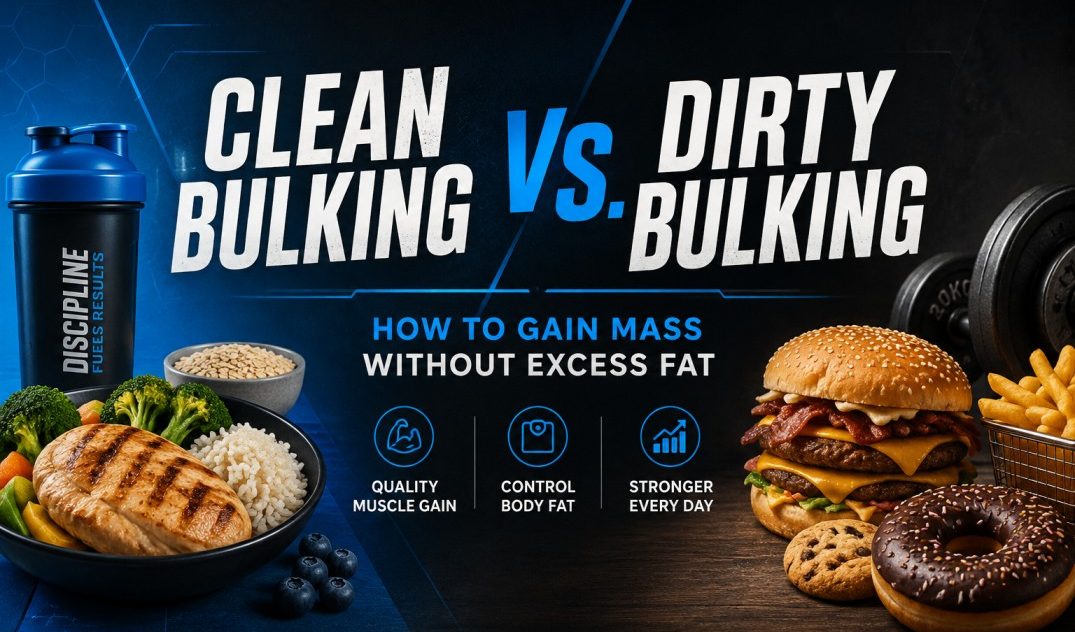
Clean Bulking vs. Dirty Bulking: How to Gain Mass Without Excess Fat
Gaining weight and gaining quality muscle are not the same thing, even though the scale often makes them look identical. The debate over clean bulking vs dirty bulking comes down to how that weight gets added, and whether the surplus you eat is working with your training or against it. Calorie quality, surplus size, training intensity, and recovery all play a role in whether the number on the scale reflects real progress.
For bodybuilders and hardgainers alike, this distinction matters. A well-planned approach can support steady muscle growth while keeping body fat in check, and resources from Rock Solid Formulations can help round out a bulking plan once the nutrition and training basics are in place.
The difference between clean bulking and dirty bulking comes down to control. Both methods use a calorie surplus to support growth, but clean bulking emphasizes a moderate, controlled surplus built from nutrient-dense foods and steady weight gain. Dirty bulking typically uses a larger, less structured surplus that can produce faster scale-weight increases, often at the cost of more body-fat accumulation.
What Is Bulking?
A bulking phase is a period where a lifter deliberately eats more calories than they burn in order to support muscle growth. Muscle tissue does not build itself from nothing; it requires enough energy and the right nutrients, particularly protein, to repair and grow after training.
A calorie surplus provides the raw material for this process, but simply eating as much as possible is not the most effective strategy. Excess calories beyond what the body can use for recovery and growth are more likely to end up stored as fat rather than muscle.
Resistance training is what gives the body a reason to build muscle in the first place. Without a consistent training stimulus, extra calories are far more likely to become body fat than lean tissue.
Beginners, advanced lifters, and hardgainers often respond differently to the same surplus. A bulk should be planned around actual training progress, nutrition habits, recovery capacity, and individual body-composition goals rather than a one-size-fits-all number.
Clean Bulking vs. Dirty Bulking: What Is the Difference?
When comparing clean bulking vs dirty bulking, the core distinction is not whether you gain weight, but how you gain it and how much of that weight ends up being muscle versus fat.
What Is Clean Bulking?
Clean bulking generally involves a controlled calorie surplus built primarily from nutrient-dense meals, adequate protein, quality carbohydrates, and dietary fats. Weight gain tends to be gradual, and progress is monitored regularly so adjustments can be made along the way.
Clean does not mean every meal has to be perfect or that enjoyable foods are off-limits. It simply means the overall diet is structured and intentional rather than left to chance.
What Is Dirty Bulking?
Dirty bulking generally involves a larger or poorly monitored calorie surplus, with greater reliance on calorie-dense convenience foods. This approach can produce faster weight gain, but with less emphasis on food quality and a greater likelihood of unnecessary fat gain.
This is not about shaming anyone’s food choices. Plenty of lifters have used a looser approach at some point, and understanding the tradeoffs simply helps you decide what fits your goals.
Clean Bulking vs. Dirty Bulking Comparison
| Factor | Clean Bulking | Dirty Bulking |
|---|---|---|
| Calorie Surplus | Moderate and controlled | Larger and less monitored |
| Food Quality | Emphasizes whole, nutrient-dense foods | Relies more on convenience and calorie-dense foods |
| Speed of Weight Gain | Gradual | Faster |
| Muscle-Gain Potential | Supports steady lean gains with training | Can support gains, but harder to isolate from fat gain |
| Risk of Excess Fat Gain | Lower | Higher |
| Energy and Digestion | Generally more stable | Can fluctuate |
| Ease of Tracking | Easier to monitor and adjust | Harder to track accurately |
| Cutting Phase Afterward | Often shorter or less aggressive | Often longer and more difficult |
Benefits of a Clean Bulk
A clean bulk offers several practical advantages for lifters focused on long-term progress:
- Better control over the pace of fat gain
- More predictable, trackable progress over time
- Easier nutritional tracking with fewer surprises
- Improved intake of vitamins, minerals, and fiber from whole foods
- Potentially better digestion and steadier energy levels
- A shorter or less aggressive cutting phase afterward
- A clearer understanding of how your body responds to calories
A clean bulk does not guarantee zero fat gain. Some fat gain is a normal part of any calorie surplus, but the approach generally keeps it more manageable.
Potential Drawbacks of Dirty Bulking
Dirty bulking has its own set of tradeoffs that are worth understanding before choosing this approach:
- Faster accumulation of body fat alongside muscle
- Difficulty distinguishing real muscle gain from general weight gain
- Digestive discomfort from high volumes of processed or calorie-dense foods
- Fluctuating energy levels throughout the day
- Generally poorer overall food quality
- A longer, more difficult cutting phase afterward
- Potential for reduced insulin sensitivity or other concerns if poor dietary habits continue over a long period
Can Dirty Bulking Ever Be Useful?
There are situations where calorie-dense foods genuinely help, particularly for very active hardgainers or individuals with a naturally low appetite who struggle to eat enough. This does not require following an uncontrolled dirty bulk, though.
Calorie-dense foods can be worked into an otherwise balanced diet without abandoning food quality altogether. Useful additions include:
- Rice
- Pasta
- Oats
- Nut butters
- Olive oil
- Avocado
- Whole-fat dairy, when tolerated
- Smoothies
- Dried fruit
- Higher-calorie homemade shakes
How to Lean Bulk Effectively
Learning how to lean bulk effectively comes down to a handful of consistent habits rather than any single trick.
Start With a Moderate Calorie Surplus
A surplus should be large enough to support growth without being unnecessarily excessive. Calorie needs vary based on body size, training volume, metabolism, occupation, and daily activity, so there is no single number that works for everyone. Track trends over a couple of weeks rather than reacting to one daily weigh-in.
Set an Appropriate Rate of Weight Gain
Gradual weight gain is generally easier to manage than very rapid gain, since it gives you more room to adjust before fat accumulates too quickly. Weekly weight averages, progress photos, gym performance, and waist measurements all give a fuller picture than the scale alone. Not every pound gained will be muscle, and that is normal.
Consume Enough Protein
Spreading protein across several meals throughout the day supports muscle repair and growth. Practical sources include eggs, poultry, fish, lean meat, dairy, beans, lentils, tofu, and protein-rich shakes when appropriate for your routine.
Use Carbohydrates to Support Training
Carbohydrates help fuel training intensity, replenish glycogen stores, and support workout performance and recovery. Rice, oats, potatoes, fruit, bread, and pasta are all practical options to build a bulking diet around.
Include Healthy Dietary Fats
Dietary fats contribute meaningful calories, support normal physiological function, and help meals feel satisfying. Reasonable sources include olive oil, nuts, seeds, and fatty fish, though fats alone do not directly drive muscle growth.
Prioritize Progressive Resistance Training
Calories alone do not build quality muscle. Progressive overload, proper technique, consistent training, and sufficient weekly volume are what actually drive growth. Avoid changing your program too frequently, and keep a written log so you can track real progress over time.
Get Enough Sleep and Recovery
Muscle growth happens through adaptation and recovery, not just during the workout itself. Consistent sleep, planned rest days, and stress management all support the recovery process that allows training to actually pay off.
Best Foods for a Clean Bulk
High-Quality Protein Sources
Chicken, turkey, lean beef, fish, eggs, Greek yogurt, cottage cheese, and legumes are practical staples for meeting daily protein needs.
Carbohydrate Sources for Training Energy
Rice, oats, potatoes, whole grain bread, pasta, and fruit provide the energy needed to train hard and recover between sessions.
Calorie-Dense Foods for Hardgainers
Nut butters, olive oil, avocado, dried fruit, granola, and full-fat dairy can help hardgainers add calories without needing to eat unmanageable food volumes.
Fruits and Vegetables for Micronutrients
Leafy greens, berries, citrus fruit, and colorful vegetables round out a clean bulk with fiber, vitamins, and minerals that support overall health.
Food selection should always account for personal allergies, intolerances, preferences, budget, and digestion, since the best foods on paper are not useful if you cannot eat or afford them consistently.
Best Mass Gainer Strategy for Hardgainers
When it comes to finding the best mass gainer for hardgainers, the right choice is not necessarily the product with the highest calorie count. Instead, consider total daily calorie intake, protein content, carbohydrate quality, serving size, digestive tolerance, added sugar, ingredient transparency, convenience, and how well it fits alongside your regular meals.
Homemade shakes can also help hardgainers increase calories without relying entirely on packaged products. A simple example is a shake made with milk or a dairy-free alternative, oats, a banana, a spoonful of nut butter, and a protein source blended together. Exact calories and macros will vary depending on the specific ingredients and brands used.
How Supplements Can Support a Bulking Phase
Supplements are meant to complement a calorie-controlled diet, resistance training, sleep, and recovery, not replace any of them. Categories commonly used during a bulking phase include protein support, performance support, workout energy, muscle-pump support, convenient calorie support, and general recovery support.
Bulking Supplements from Rock Solid Formulations
Ultra Mass KONG and Lean Mass
Ultra Mass KONG and Lean Mass is a page worth reviewing for readers exploring advanced muscle-enhancement and mass-building options. Product information describes it as a formula positioned for lean mass, strength, and post-training recovery support. Because this page can represent a broader offering, check the current product listing and label for specific details before purchasing.
RS Mass Stack — A Combined Bulking Option
For readers researching a bulking stack for muscle growth, RS Mass Stack is positioned by Rock Solid Formulations as a combined package featuring RS Grow and a mass-focused product, along with an additional promotional item where currently offered. Package contents and any current promotion are subject to change, so review the live product page for up-to-date details rather than relying on this description alone.
RS Mega Blast Swole — Pre-Workout Performance Support
RS Mega Blast Swole is positioned as a pre-workout and performance-support product rather than a calorie-based mass gainer. The official product page describes it around workout performance and what it calls an Enduro-Pump Complex. Improved workout support may complement a bulking program, but it does not replace calorie intake, protein, or progressive training.
RS Grow — Lean-Mass and Strength Support
RS Grow is positioned by Rock Solid Formulations as a muscle-growth, strength, and lean-mass support supplement intended to be used alongside consistent training and adequate nutrition. Review the official product page, directions, and any warning information before use, and speak with a healthcare professional if you have questions about how it fits your routine.
How to Build a Bulking Stack for Muscle Growth
A sensible bulking stack for muscle growth is based on your actual needs, not on using as many products as possible.
Nutrition Foundation
Daily calories, protein, carbohydrates, fats, and whole foods form the base that everything else supports.
Training Performance Support
A product such as RS Mega Blast Swole may be considered by lifters looking for workout-focused support around training sessions.
Mass and Muscle Support
Readers may compare RS Mass Stack, RS Grow, and the Advanced Muscle Enhancers page based on their individual goals and the current product details listed on each page.
Recovery and Monitoring
Sleep, rest, hydration, digestive comfort, and consistent progress tracking round out a complete approach to bulking.
Review labels carefully and consult an appropriate healthcare professional before combining supplements, especially if you take medication or have a medical condition.
Common Bulking Mistakes to Avoid
- Increasing calories too aggressively, too quickly
- Treating every meal as a cheat meal
- Neglecting protein intake
- Avoiding fruits and vegetables
- Relying entirely on supplements instead of food
- Failing to track body weight and waist changes over time
- Changing your training program too often
- Performing insufficient progressive overload
- Ignoring sleep and recovery
- Cutting calories immediately after a few days of scale fluctuation
- Combining several products without reviewing labels
- Assuming hardgainers cannot gain excess body fat
Frequently Asked Questions About Clean and Dirty Bulking
Is clean bulking better than dirty bulking?
Both methods use a calorie surplus, but a controlled clean bulk is generally easier for managing body fat and tracking real progress. Dirty bulking can still build muscle, but the added fat gain often makes results harder to evaluate and the following cutting phase more difficult.
How large should my calorie surplus be for a lean bulk?
Calorie needs vary based on body size, activity level, training volume, and metabolism, so there is no single universal number. A moderate, adjustable surplus that you monitor and tweak over time is generally more manageable than an extreme one from the start.
How can hardgainers gain weight without eating junk food?
Hardgainers can rely on calorie-dense whole foods, homemade shakes, more frequent meals, and consistent tracking to increase intake without turning to low-quality convenience foods. Spreading calories across the day also tends to be easier to manage than a few very large meals.
What is the best mass gainer for hardgainers?
The best option depends on individual calorie requirements, digestion, ingredient transparency, and how it fits into your existing diet. RS Mass Stack is one option readers can review, though no single product is universally the best fit for everyone.
Can I build muscle without gaining any fat?
Some fat gain is a normal part of a calorie surplus, and promises of zero fat gain are not realistic. A controlled clean bulk simply helps limit how much fat accumulates alongside muscle growth.
How long should a bulking phase last?
Duration depends on your starting body composition, rate of progress, personal goals, and overall health, rather than a fixed universal timeline. Some lifters bulk for a few months, while others take a longer, more gradual approach.
Do supplements replace a bulking diet?
No. Supplements are designed to complement a calorie-controlled diet, resistance training, sleep, and recovery, not replace any of them. Progress ultimately depends on the fundamentals working together.
Choose a Smarter Approach to Building Mass
Understanding clean bulking vs dirty bulking comes down to recognizing that how you gain weight matters as much as how much you gain. A controlled calorie surplus, consistent protein intake, quality carbohydrates and fats, progressive training, and adequate recovery all work together to support lean muscle growth while helping manage excess fat.
Hardgainers can still use calorie-dense foods to meet their needs without following an uncontrolled dirty bulk. For readers ready to explore supplement support, RS Mass Stack is a starting point worth reviewing, with RS Grow, RS Mega Blast Swole, and Ultra Mass KONG and Lean Mass available as related options depending on your specific goals. As always, review product labels carefully and speak with a qualified healthcare professional before starting a new supplement or nutrition plan.
Disclaimer: This article is provided for general educational purposes and is not medical or nutritional advice. Dietary supplements are not intended to diagnose, treat, cure or prevent any disease. Individual results vary. Consult a qualified healthcare professional before beginning a new supplement, nutrition or training program, particularly if you have a medical condition or take medication.